Flat roofs, IBR, chromadek and tile — torch-on and liquid systems, gutter linings and crack injection. We get onto the roof and establish what is actually failing rather than what looks wet, then quote it in writing. No call-out fee.
We repair and waterproof roofs. We are not a handyman service — no geysers, plumbing or ceiling repairs — and we are applicators, not suppliers, so we do not sell materials.
Free, no obligation — just your name, number and suburb. We’ll call you back within 2 working hours.
We'll be in touch within 2 working hours to arrange the site assessment. If it's urgent, call 073 561 4713.
Water gets in at one point and travels, so the wet patch on the ceiling is rarely under the fault. These are what we actually find when we get up there — and what each one takes to put right.
Sun and movement break a membrane down until it cracks or lifts at the laps. Stripped back or overlaid, depending on what is underneath and how much of it is still sound.
Where the membrane turns up against a wall or parapet. This is where flat roofs actually fail most often, and it is almost never visible from inside the building.
A great many warehouse leaks start in the gutter rather than the roof. Lined and detailed into the outlets rather than patched, and usually the cheapest thing up there to put right.
Water that sits instead of running off will find every weakness eventually. Falls corrected during preparation so the roof drains, rather than sealing over the problem.
Structural crack injection first, then the membrane over a properly prepared surface. Waterproofing over a live crack buys you one season.
Expansion joints and joint sealant replaced rather than topped up. Old sealant does not bond to new.
Heat is not an option over sheeting, so these go on liquid — reinforced through the laps and over every fastener, then a reflective topcoat. Resheeted where the sheet is past coating.
Cement and concrete tiles go porous with age. Sprayed and sealed, which is also what most ‘leaking tile roof’ call-outs turn out to need.






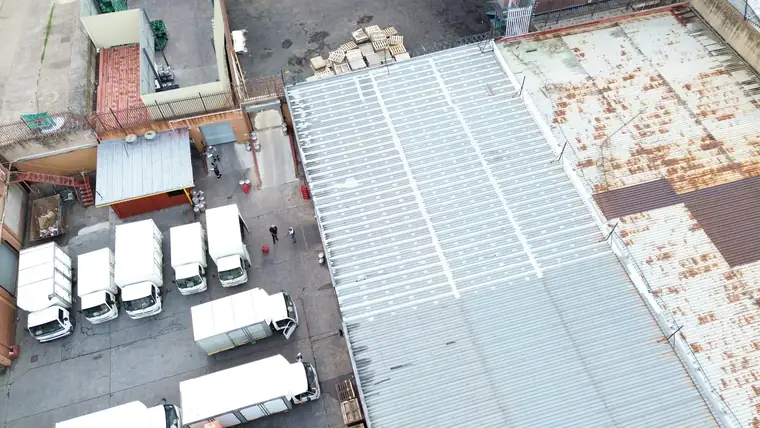
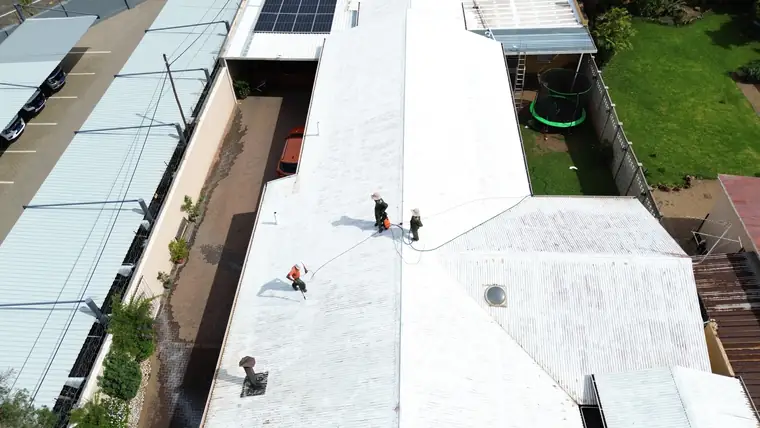
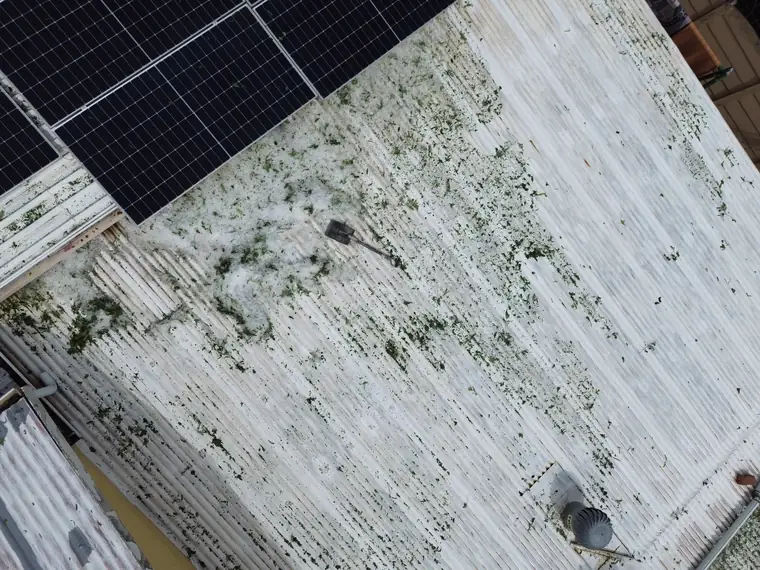
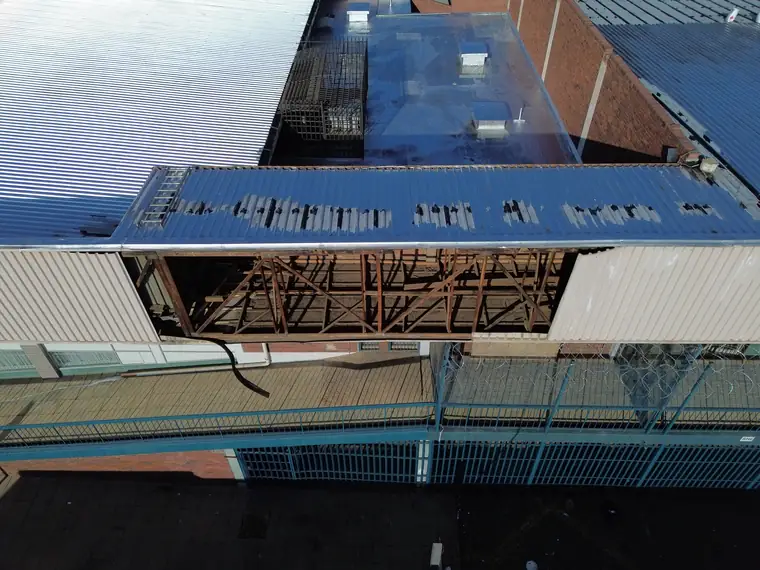
Commercial and industrial buildings across Gauteng. Every photograph here is our own work, shot on site.
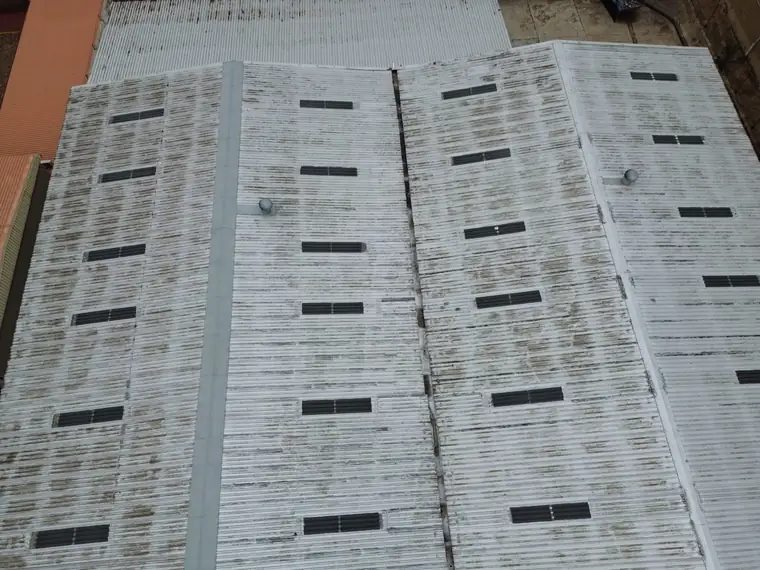
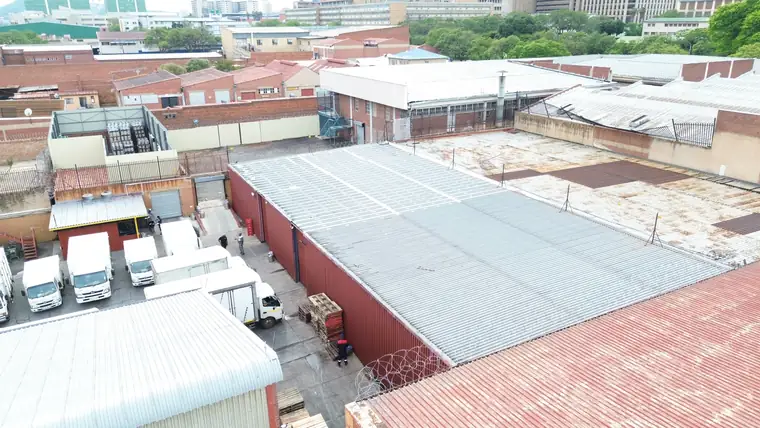
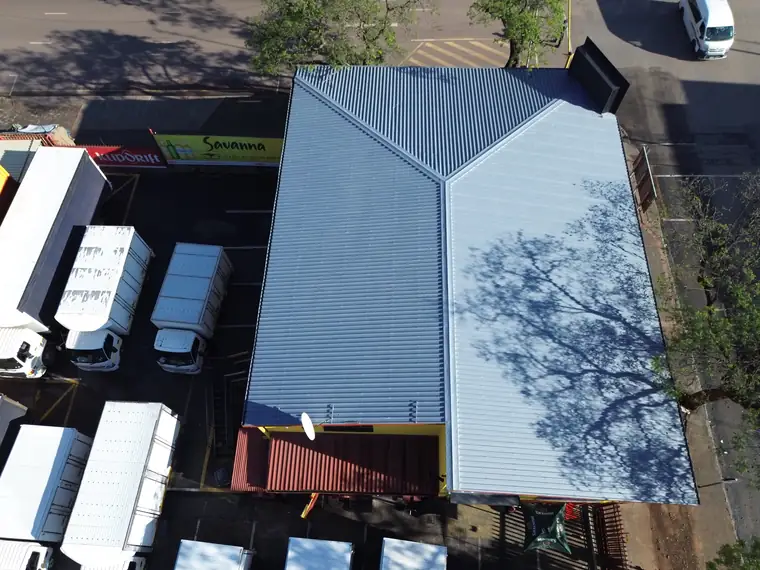
Most roofs that leak again were repaired, not fixed — a membrane laid over an unprepared substrate will lift no matter whose name is on the roll. When a repair needs a new build-up, this is the one we quote and the one we install.
Rule thickness is drawn to each layer’s specified depth
Different surfaces fail in different ways, so they do not get the same system. Torch-on belongs on a concrete roof slab; it does not belong over a corroding IBR sheet, where heat is not an option at all. This is what we install where.
Torch-on APP modified bitumen membrane, 4 mm, over a primed and prepared slab, with polyester fleece through every overlap and upstand. The standard flat roof waterproofing system, and the one most commercial roofs in Gauteng want.
Water pushing in from outside is a different problem from water sitting on top. Tanking is specified against the water table and the structure, negative or positive side depending on what the building allows.
Box gutters are where a great many warehouse leaks actually start, and they are usually the cheapest thing on the roof to put right. Lined and detailed into the outlets rather than patched.
Heat is not an option over sheeting, so these go on liquid — the systems most people call liquid rubber. Laykold acrylic and bitumen-based membranes, reinforced through the laps and over every fastener, then finished with a reflective topcoat against the Highveld sun.
Sometimes the honest answer is that the sheet is gone and no coating will save it. We will tell you that at the assessment rather than sell you a system that buys you eighteen months.
We are applicators, not suppliers — we install these systems on your building, we do not sell the materials on their own. We install Darachem and Laykold waterproofing systems, and Plascon and Dulux coatings, to each manufacturer’s specification. Which one goes on your building is a decision made at the assessment, against the substrate and the guarantee you need — not decided before we have seen the roof.
Worth saying upfront so you can tell quickly whether we are the right fit. We repair roofs by fixing what is letting water in — the membrane, the coating, the gutter, the joint, the crack. If a roof is coming in tonight, phone us: there is no call-out fee, we get a team there, assess it and quote on site. What we are not is a handyman service, and for that we would rather point you to someone better suited than take it on badly.
Gauteng takes almost all of its 700 mm in the summer thunderstorm season. Roofs booked in August get done in dry conditions, properly cured, before the first storm finds the fault.
We talk through the building, the history of the problem, your budget and the window you have available to do the work.
We come out, get onto the roof, and establish what is actually failing rather than what looks wet. You get findings with photographs.
A written specification with the system build-up, materials, areas in m², programme and guarantee term. Issued within 24–48 hours of the assessment.
Licensed, insured tradespeople working to an agreed programme and OHS file. Clean sites, contained materials, and work scheduled around your operating hours where required.
We flood the roof to prove it holds, photograph the finished work, fix any snags, and issue the written guarantee with the completion documents.
Antoni Botes founded AnJo in 2005 after working every side of the table — main contractor, sub-contractor, project manager, professional team and client. He runs the assessments himself.
Tradespeople are licensed and insured. Strict adherence to occupational health and safety regulation, with a site file for every project and clean, organised job sites throughout.
Antoni has run projects valued up to R250 million over twenty years in the trade, including multi-campus and multi-depot clients. Programme, phasing and reporting are normal parts of the job here.
No. We come out, get onto the roof and establish what is actually failing, and you get a written quote off the back of it. If a roof is coming in and you need someone there tomorrow morning, we will bring the team and the gear, assess it on site and quote you on the spot — and if you say go, we start.
Yes. Retail, warehousing and schools almost always need it. We programme night work, weekend work and holiday-window work — it needs to be agreed upfront so it is priced in and the OHS file covers it.
Between five and ten years depending on the system specified and the condition of the substrate. The term is stated in the quote before you commit, not decided afterwards, and the written guarantee is issued with the completion documentation.
Most of our work is on occupied buildings. It changes the method — containment, phasing, access control, odour management on liquid systems — and we would rather build that into the programme than surprise your tenants with it.
We respond to enquiries within two working hours and aim to be on site within a few days. The written specification and quote follow within 24 to 48 hours of the assessment.
It depends on the area in m², the system the roof needs and how much preparation the substrate takes — which is why we will not quote a number over the phone and then revise it once we are up there. The assessment itself is free and there is no call-out fee, so finding out what it will actually cost does not cost you anything.
Sometimes, and when a patch is the honest answer we will say so and price it. But a patch over a perished membrane or a live crack buys you one season, and you will be paying someone again next winter. We would rather tell you which of the two you are looking at before you spend the money.
Yes. We service clients with campuses and depots across Gauteng on planned maintenance programmes. If this is one problem roof with more behind it, that is a sensible way to start.
Yes. Most of our longest-running client relationships started with one modest job on one building, and grew from there once the work held up. If you have a single problem roof and forty more behind it, that is a sensible way to start and we are happy to price it.